
Today, machine vision combined with GPU-powered reasoning analytics allows healthcare professionals to focus on what they do best, health and safety. Valuable data collected from machine vision machines provides predictive insights for better results. With technological advances in machine learning and artificial intelligence (AI), the world today has the ability to analyze real-time data in order to instantly predict, prevent, and treat diseases or epidemics.
However, the scarcity of high-quality doctors, the small number of large medical equipment in hospitals, the low efficiency of manual film reading, and the difficulty in identifying potential lesions with the naked eye have all prompted the traditional medical imaging industry to combine with new machine vision technology.
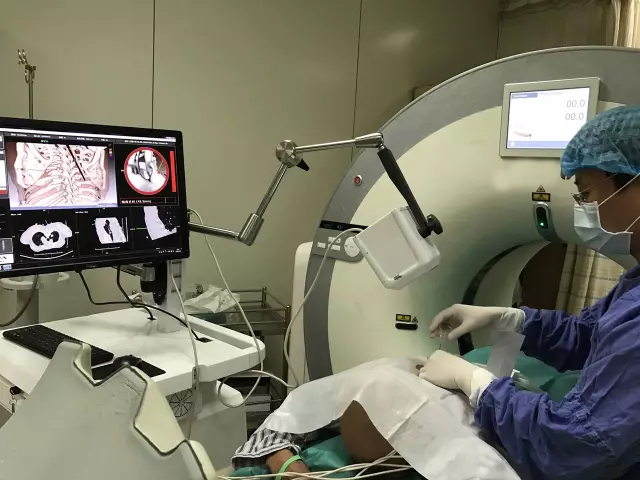
Application of intelligent manufacturing machine of Shanghai Hua Yong in medical imaging
For the medical use needs of Ai intelligent assistance reading film, Shanghai Hua Yong provides an industrial control machine GRBSYS-4Uxxx-xxx to provide stability, high performance, low power consumption and high-resolution graphics for machine vision.
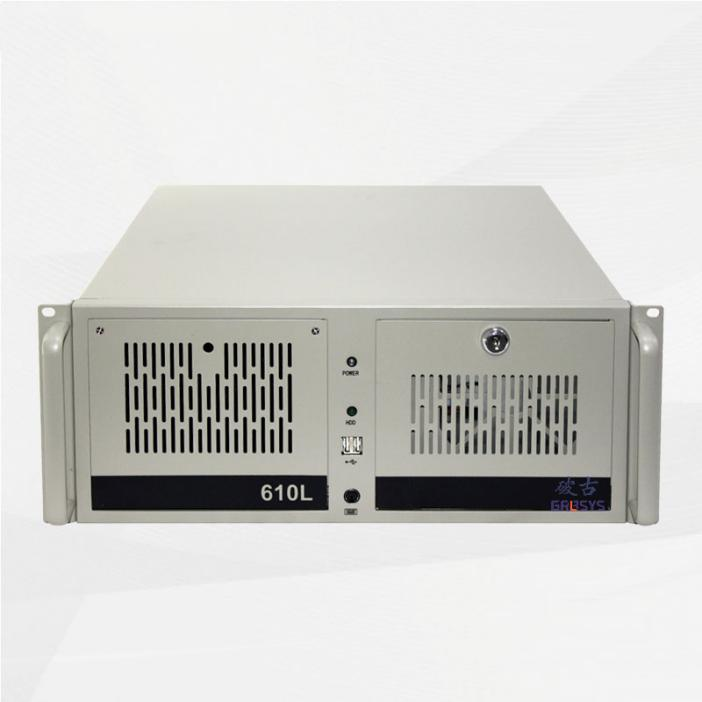
Combined with the processor's powerful computing function and industrial characteristics, to meet the different requirements of medical image processing, data transmission and equipment control.
In order to match a large amount of patient medical data generated by high-speed computing and parallel graphics computing of machine vision and a large amount of information such as the database of film reading and analysis of high-quality doctors, Huasyong Shanghai provides a stable and standard rack-mounted server GRBSYS-SERVER-xxx for the corresponding data platform.
Help provide higher quality medical imaging and prevention strategies. Machine learning through inference analytics can rely on viewing and analyzing hundreds of scans in real time to identify meaningful pictures, rather than relying on experts. This is done through deep learning algorithms and neural networks that can easily compare 3D images to thousands of images and detect even the smallest lesion problems.